Showing posts with label Movies. Show all posts

Saturday, September 28, 2019

Movie Review: "Tolkien" (2019)

Well, here's to wrapping up the 2019 Tolkien Blog Party hosted by The Edge of the Precipice. Many thanks to Hamlette for hosting such a wonderful party again this year!


4/5 Stars

I had originally intended to see this movie in theaters, but I couldn't find anyone with whom to go, so I decided to wait to watch it until it came out for rental. I can honestly say that I felt I didn't lose much by waiting; while the movie was enjoyable and even touching, it wasn't something that I felt I needed to see on the big screen. 

Tolkien focuses on the author's early life from the time his family moved from Africa back to England up through the start of WWI. While I was initially disappointed by the fact that we didn't get to meet the Inklings (including C.S. Lewis), the scope of the film was appropriate for the run time. 

Like all biopics, the film does take some liberties, at least according to critics that I could find. (I haven't done extensive reading on his life, so I had to take the word of some people on the internet). Mostly, it seems they added a few scenes for dramatic effect and shuffled a couple points around in the timeline. Overall, though, it seems the film did a good job sticking to the general facts of his life. 

The movie does lots of flashing back and forth between Tolkien's time as a soldier in the trenches and his earlier life and childhood. I'm not overly fond of this sort of format, but it worked well in this instance, serving to build tension throughout. 

The film mostly focuses on Tolkien's physical life, rather than his imaginative works. However, for those familiar with his writing, you can see how life events might have shaped the legends of Middle-Earth. (Ex. Edith dancing in the woods as inspiration for Luthien). Unfortunately, the film sidelines his Catholic faith and its role in shaping his stories, choosing to spend much more time on the friendship he forms with his classmates and his courtship of his future wife. I don't think it was necessarily a bad choice; nevertheless, it was mildly disappointing. 

I would recommend this movie as an enjoyable way to pass the time to anyone who has a mild to moderate interest in Tolkien's life or works, though someone who has an extremely deep interest may want to seek out a more traditional biography.


Friday, November 2, 2018

"A Wrinkle in Time" (2018) Part 2

I started last week with some thoughts on the plot and characters of the 2018 adaptation of A Wrinkle in Time. This week, I'll be finishing up my review/rant with thoughts on thematic and cinematic elements of the movie. This does contain spoilers. 


Thoughts--Themes
Obviously, everyone has a different thought on the theme of a book, so I can only speak from what A Wrinkle in Time did for me as a novel and what it did for me as a movie.

The movie picked up on some themes of the novel--the iconic love conquers all, for instance--and light vs. the darkness.

Light vs. darkness took an interesting twist in the movie adaptation. The discussion of giving into evil is turned into invasion of evil--an interesting choice for a world that doesn't seem to believe in a devil any longer. People's role in giving in to evil, choosing to satisfy their inner greed and jealousy, is sidelined for a theory that something from the outside comes in and fills the emptiness. It's a subtle change in nuance.

Unsurprisingly, they opted to eliminate Scripture references from the cinematic adaptation. While not shocking, I thought at least one of the quotes (John 1:5) would have been pertinent to the themes expressed in the movie. I was also mildly surprised at the neglect of referring to the Mrs. W's as angels (or even stars)--it seemed an interesting part of backstory that was cut out. It would be a far stretch to call the novel a Christian novel--it's really rather Universalist, listing Christ right next to Buddha as a warrior for the light. But someone would have thrown a fit over religion if it had been included, I suppose.

I was also disappointed that the concept of tessering was not explained further. There's a really interesting explanation in the book that's rather iconic and I thought they had set up a nice play into it with Meg's folding note she received from her father, but I suppose they thought it was a little overfull for a kid's movie.

On a really petty side note, I was also bummed that they didn't include one of my favorite lines--"Like and equal are not the same thing at all!" The neglect of it plays into the overall botching of the Camazotz plotline. I thought it would be an interesting play considering the increased diversity of the cast. (Which they didn't beat into your skull, so it worked nicely. It felt pretty organic, really, so points for that.)

Thoughts--Movie Stuff

Alright, here we get to the part that I don't usually get to review--the cinematic appeal of things. Overall, I felt the movie was just too bright. It's a sci-fi movie, so it'll by necessity have loads of CGI, but it felt like it went out of its way to be bright, obnoxious, and almost overly stimulating. Camazotz (with the exception of IT), felt just the same as Uriel, which was ludicrous. The portrayal of IT was unconventional, but creative--a series of neuron connections instead of a disembodied brain. I'm not sure I'm a huge fan of it, but hat tip for the neurons firing.

The music, overall, didn't impress me. It just felt overwhelming and climaxed a bit too much for my taste (every little thing got a music climax). The actual plot climax didn't feel like it got a deserving score. That being said, some of the tunes repeated rather nicely.

The CGI was good, though that's not always saying much anymore. There wasn't too much that took me out of the movie with thoughts of, "Holy cow, that's a green screen!". I'm still not sure why the changed the pegasi-creatures on Uriel into flying cabbage monsters, but I'd heard about that in reviews, so it didn't shock me too terribly much.

Alright, I think I finally got all the ranting out of my system. Any thoughts? How's NaNo going?

Friday, October 26, 2018

"A Wrinkle in Time" (2018) Part 1

Be forewarned: I'm discussing the recent adaptation of  A Wrinkle in Time. If you've been following the blog for long, you know it's one of my favorite books and things could get messy. But here goes. This article does contain spoilers for both the book and the movie.

Overview
For those of you who don't know, A Wrinkle in Time follows the sci-fi adventures of Meg Murray, a young girl who is out to find her father who went missing in an inter-dimensional/space travel experiment. She's assisted by her younger brother, Charles Wallace, school friend/acquaintance Calvin, and three mysterious women: Mrs. Whatsit, Mrs. Who, and Mrs. Which. Their travels take them to various planets, where the children discover that there is a great evil in the universe which is even now trying to gain control of Earth. Meg and company must rescue her father from a planet that has given into this evil, while also not falling prey to it themselves.

Thoughts on the Movie--Plot
I promise that I really do have some good things to say about the movie. Firstly, the first two thirds of the movie did a good job of sticking to the book's plot and even the last third did a fairly good job of doing so. It was definitely recognizable as A Wrinkle in Time. 

They decided to add a couple small scenes that I felt changed the tune of things a little bit, but overall felt fine. Some were necessary for transporting the setting from the 1960's to the modern day and worked well. Why they decided to change when Mrs. Whatsit enters the story is beyond me, but it didn't hurt anything other than the general flow.

The last third of the movie saw some more significant changes in plot. They got rid of the Aunt Beast plot line, which I felt wasn't a bad choice as far as run time for the movie. Sure, I think there's a lot of thought that went into that bit, and it might not be as bad as Tom Bombadil in Fellowship of the Ring, but it's easy to remove without sacrificing terribly much of the story arc. I think leaving it out did harm Meg's character arc a little, but such is life.

Where the plot really made me unhappy was the plot on Camazotz. It went from being a planet that had been under control of The Black Thing to being The Black Thing/(The) IT itself. It went from this utterly creepy place in the book, filled with grays and a subtle mechanical-ness and off-ness to this gaudy, overwhelming, almost Alice-in-Wonderland place. It didn't feel evil. It utterly lost the chill it had of being a planet under The Black Thing's control--because part of the plot was that was what was about to happen to Earth. Rather, it became this abstract, trippy place that I wouldn't have been sure was evil if the Mrs. W's hadn't pointedly told us that. The use of the Man with the Red Eyes is the primary victim in the portrayal.

Sadly, the climax was a weak point in the movie. Rather than facing IT being pivotal for both Meg and Charles' development as people and the showdown being truly terrifying, I never felt that IT had much of a chance. Also, the voice they used for IT did not do much for me--the creepy, monster-esque voice had nothing on the calculating voice of Charles Wallace as portrayed in the book.


Thoughts--Characters

As far as characters go, they really did a good job with Meg. Overall, she's predictable as the same girl from the book, and I really felt that she was the same character, despite significant differences in appearances. There's always something lost in translation from page to screen, but they did a good job overall of staying true to her character, even if (as mentioned above), they might have done more with her story arc. For how well they did with Meg, I really wanted to like the movie more.

Unfortunately, Meg was the only character they really transferred well. Calvin wasn't terrible, but he felt...flat. You learn virtually nothing about him in the movie and there's not much to make you like him other than the fact that he befriends Meg. He has some tragic backstory about not being able to please his father, but we don't even get much about that. In the book, there's this really endearing scene where he calls home to make sure his mother knows he'll be missing dinner, even though he just gets yelled at by one of his many siblings. It makes you love him, and there's nothing similar in the movie.

Charles Wallace bugged me, though I'm still trying to figure out exactly why. He's explained to be a prodigy, but we don't see much of that. He also doesn't have much of a character arc. In the book, his character development centers around hubris. He doesn't even have much to be proud of, because we don't realize how smart he is.

Now we reach the point where I get onto my soapbox. The main downfall of this movie for me was the portrayal of the Mrs. W's. Mrs. Who transfers fairly well (though they have her quote weird things--give me more Shakespeare!), but then they have her talk without quotes so much that it loses its touch. Sadly, she's the best of the three ladies.

Mrs. Which as portrayed by Oprah does very little for me. In the book, she's mysterious, in the background, and generally elusive. In the movie, they seemed to want Oprah to take the lead. Fine, but they totally got her character wrong. Yes, it's biased, but I'm a book purist. I might have been okay with it if they had offered significant improvement over the novel, but they missed the mystery of her character to balance out the more outgoing two. (And omitted the wordplay of Mrs. Which appearing as a witch, one of many such omissions).

However, the most egregious violation of character was Mrs. Whatsit. Mrs. Whatsit goes from this comforting, warm, outrageous character to a snooty, snobbish, stuck-up prom-queen-esque disaster. (I know, I know, I'm overprotective of the book.) Really, I enjoyed a good portion of the movie, but I could enjoy very little where she was in it.

Join me next week for discussion on the themes and cinematic elements of the movie, as well as for NaNo kickoff!

Did you see the movie/read the book? What did you think? Am I overreacting?

Tuesday, June 20, 2017

What Hero Does the World Deserve?

Source
This article may contain some mild spoilers for Wonder Woman.

I have a...spotty...attraction to superhero movies. Sure, I like Captain America and Thor (and therefore the Avengers), I was hooked on Arrow for a little while, and I enjoyed The Dark Knight trilogy, but they aren't my go-to genre. Guardians of the Galaxy didn't do too much for me (other than Drax), Man of Steel was forgettable, and I really have no urge to see any of the X-Men movies.

So when my roommate suggested going to see Wonder Woman, I was neither thrilled nor appalled. I didn't expect much out of it.

While I definitely wouldn't classify it as one of my favorite movies, it was a pleasant surprise. It had an interesting exploration of good vs. evil, a touch of humor, and some good fight scenes. Its setting in World War I provided an interesting backdrop.

Aside from the question of evil, I think one of the most interesting aspects of the movie was the idea of what humans deserve. Diana (Wonder Woman) is repeatedly told that the human race does not deserve her help.

In one of the scenes, several of the characters share a drink, toasting: "May we get what we want, get what we need, but may we never get what we deserve."

Obviously, the characters have decided that they don't deserve anything good. It's easy to see why they would think that--the world is embroiled in one of the most bitter and deadly conflicts it had ever seen. Corruption, violence, and depravity surround many of the characters. All have lost something dear to them and many have also lost a sense of their moral compass during the war. Indeed, the human race doesn't seem to deserve a hero--especially a good one.

This attitude is also reflected elsewhere in the DC universe. At the end of The Dark Knight, Lieutenant Gordon says of Batman, "He's the hero Gotham deserves, but not the one it needs right now."

One can conclude from these quotes that it's obvious to the writers of these films that humans don't deserve good things, but they also sometimes need something good, like mercy or grace.

The idea of undeserved redemption is further explored at the climax of Wonder Woman. Faced by her nemesis who offers her one last chance to have her deserved revenge, she replies, "It's not about deserve. It's about what you believe. And I believe in love."

I'm sure the writers didn't stick a "hidden Christian message" into either story, but it certainly brings to mind the fact that we did nothing to earn Christ's sacrifice for us. We deserved death, but instead He became the hero we needed, but didn't deserve, sacrificing Himself for us out of love.

The best art always has at least a shadow of the truth in it.

What recent movie unintentionally reminded you of a Christian idea or concept?

Tuesday, December 22, 2015

What is a Space Opera?

For those of you who have somehow missed the news, Star Wars Episode VII came out this weekend! In my opinion, it was a great start to a new trilogy and a good/decent movie on its own. I'm looking forward to seeing the next movies.

This post isn't about The Force Awakens, but rather the subgenre to which it belongs: the space opera.

From here.
The space opera is a subgenre of science fiction and focuses on space battles and drama, typically involves romance, and has a limited focus on technology. Earth and the known universe may or may not be involved, but the story likely centers around a larger than life character trying to save the galaxy, universe, or planet. Another example of a space opera would be Ender's Game, by Orson Scott Card, though it leans a little closer to traditional sci-fi in some ways. 

The genre can be separated from "hard sci-fi" which has a much stronger focus on plausible technology and what the future might be like. These stories often center on Earth and/or the known universe. The characters in hard sci-fi are unlikely to be attempting to save the galaxy or to be larger than life. 

For those more familiar with fantasy, think of the difference between the two as epic fantasy vs. urban fantasy for a good comparison. Personally, I prefer epic fantasy and space operas. 

Which do you prefer? Have you seen Star Wars yet (no spoilers please)?

Merry Christmas! I'll see you next Tuesday with a book review.

Tuesday, November 24, 2015

A Different View from Space

For a change of pace today, I decided to head out into space and discuss three "new" sci-fi movie releases. I think that one thing we can really see from these different movies is how, even with similar premises, stories can be vastly different.

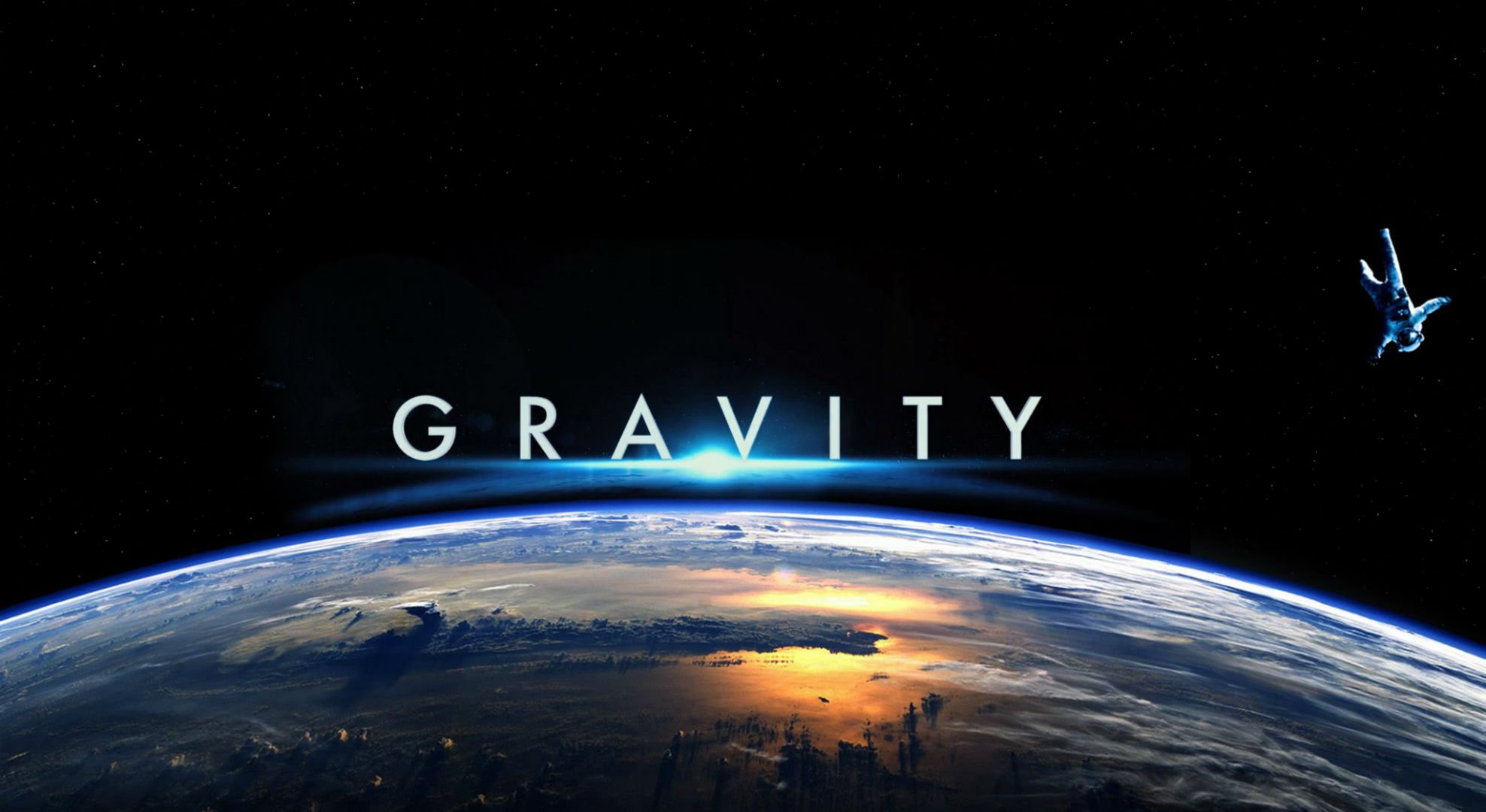
Gravity (2013)

Dr. Stone, a biomedical researcher on her first space mission, finds herself stranded alone in space, trying to make her way home. 

My rating: 3/5 stars


Interstellar (2014)

In the future, a blight is threatening  the Earth's ability to support crops. Scientists take the plunge through a wormhole near Saturn that they suspect was created by beings who are able to travel among five dimensions. On the other side, they hope to find a new world for the human race to inhabit. 

My rating: 4/5 stars

The Martian (2015)

Presumed dead after a tragic accident on a manned mission to Mars, Astronaut Mark Watney must find a way to survive and contact Earth. 

My rating: 5/5 stars


Comparison

While all of these movies feature space, return to Earth, some (varying degrees of) realistic science, and survival as common themes, there are quite a few differences between them. 

Gravity was my least favorite of the three, mostly because I really didn't like the main character. She seemed to have limited will to live and the relatively low interaction of characters didn't really float my boat. Much of her success seemed to rely on chance and, while it's certainly good to have a great series of challenges for characters, it felt like nothing at all went right. To me, it felt like more of a chance survival story than a true fight for survival. Others might disagree. 

Interstellar, in my opinion, had much stronger characters that had plights I could more readily relate to. One of the larger themes of the story is fighting for family. It also went beyond a simple survival story into some more abstract science concepts like wormholes, black holes, and the fifth dimension. The added science-y bits appeased my inner nerd. My main complaints about this movie were that it was really long and the ending felt a bit rushed. However, the intriguing concepts combined with the  internal conflicts of many of the characters. made for an interesting movie. 

The Martian was the funniest of the three. Watney's wit and humor added an extra layer to a movie that might have seemed dry and grim otherwise. Besides this, I found it more enjoyable than Gravity due to the fact that more characters are involved (we see some of the politics of what's going on back on Earth). Watney also has a strong will to live, even though he is far from unrealistic in his evaluation of the situation.  

All of these movies are PG-13, so don't go into them expecting them to be completely clean. If you like space-centered science fiction, I would recommend any of them. Even if you don't enjoy space movies, I'd still recommend The Martian. 

Have you seen any of these movies? What are your thoughts? And would you be interested in more articles like this in the future?

There will still be a Friday Fiction Fix this week, but I may be slow to respond to comments both on this post and on Friday's due to traveling. Happy Thanksgiving!

Tuesday, June 2, 2015

Learning from "Unbroken"

This past weekend, I watched Unbroken for the first time. (I know, I know, you're supposed to read the book before you watch the movie. My family decided to rent it.).

I was really impressed on multiple levels. Though the story is not speculative in nature, nor produced by a Christian company, it has many aspects that I believe are applicable on a personal level as well as from a writer's perspective.

The Storyline 

For those of you who don't know, Unbroken follows the true story of Louis Zamperini, an Olympian who ends up serving the U.S. during WWII. His plane crashes into the Pacific Ocean. He, along with two other crew members, floats in a tiny life raft for well over a month before being captured by the Japanese and placed in a prisoner of war camp. At one point, he is offered the chance to leave the camp if he publicly slanders the U.S., but he refuses.

The story of survival by itself is remarkable, but his courage is even more inspiring. To refuse the chance to leave takes more courage and moral fortitude than I think I have.

His Faith

Another thing that struck me about the movie was Louis's faith. Although he was not a Christian at the beginning of his ordeals, he later becomes one. He credited his faith with allowing him to forgive those who mistreated him.

Here again, we have an inspiring aspect of the story. Rather than blaming God, or his captors, he realizes that God is bigger than his problems and actually helped him through the ordeal. He still might have held a grudge against his captors (which I think we can all understand), but he turned to God's grace to help him learn to forgive. How much we can learn from this!

From a Writer's Perspective

This movie wasn't a "Christian" movie, but it portrayed a Christian life as clearly as many movies that have been published as "Christian" (and I daresay that it was executed far better than if the story had been done by a Christian movie company).

There were several important ideas from a Christian writer's perspective that I thought important:

  • Christian life wasn't portrayed as a cakewalk, because it isn't
Something that I see occur frequently in Christian literature is, "Oh, We accepted Christ? Everything is hunky-dory." That's not how it works. In this true story, Louis goes through many more months of severe hardship and still has to deal with the aftereffects of his experiences. If we want our writing to reflect real life, we should acknowledge the fact that we will have trouble in this world.

  • The "message" of the movie didn't overrun the story
I've read many Christian books that were wonderful...but just couldn't step away from the message to let the story grow. Don't get me wrong; I still love many of those books. But if we start to focus too much on the message we:
    • lose realism
    • seem cliche
    • lose readers (they probably didn't pick up a novel for a sermon)
    • and lose the potential to have more than one meaning for the work (if you focus on the message, odds are you will only convey that message; readers will only pick that up, and nothing else)
This was also one reason that I was glad the story was picked up by more of a mainline company


  • The writers didn't shy away from the ugly
This is a delicate subject. You have to consider your readership when writing and decide what personal limits you want to impose upon your writing (you may also have to consider those of your potential publishers).
Also, this is a war movie. It's expected to be ugly and rough; if it was anything else, it would ring false. A young adult adventure novel may "feel" perfectly fine without the grit.

I'd love to hear from you in the comments below! What else would you like to see as "extra" posts?