Showing posts with label characters. Show all posts

Tuesday, March 20, 2018

Pastors in Fiction: Ealdor

A bout of stomach flu and a 50 hour work week later and I'm back! Sorry for the delay. I hope you enjoy this installment of Pastors in Fiction, which features Ealdor from The Darkwater Saga by Patrick W. Carr.


Book: The Shock of Night, by Patrick. W. Carr. Christian fantasy.

Personality: Humble, good listener, non-judgmental.

What he brings to the table: Ealdor is a key player in the protagonist's life. He helps him to work through his PTSD-like symptoms following a war in which he was involved. He's always available for confession and is quick to help the poor, even refusing donations for his dilapidated church and telling Willet (the protagonist) to spend his money elsewhere to help others.

Pastorly/Worship Notes: We don't see Ealdor perform any sort of public service, but he frequently performs the rites of confession for Willet, as well as haeling (which seems to be somewhat similar to communion). He belongs to the Merum order of the church, which is the oldest in existence.

Ninja Status: Blue belt. I probably would give him a yellow belt, but at the end of the second book, a substantial secret is revealed about Ealdor that earns him some bonus points for secrecy.

Further Discussion: 

I love Ealdor as a character, though he plays a rather minor role in the first two books of the series. His mysterious nature opens many questions but also reveals some secrets regarding Willet Dura's own puzzling condition. He fulfills a role that I haven't seen in very many books for a pastor, Christian or otherwise. While he often is a friend and confidant for Willet, we also see him using that role in an "official" manner by performing private confession and absolution. As someone who prefers a more liturgical/traditional style of worship, it's encouraging to see that same style of worship positively portrayed in a book (without having it shoved down your throat).

I think Ealdor's role also opens up an interesting discussion on the role of pastors in people who have been traumatized. No matter how often Willet comes, he's open to the idea of providing comfort and absolution on a spiritual--and personal--level. Perhaps my reading has not been terribly broad in scope, but I can't say that the spiritual care of people suffering from a terrible past has been discussed in many books.

Ealdor isn't the only interesting religious character in this series, either. Mr. Carr does an excellent job of portraying all sorts of different shades of devotion in the church--from those who stress forgiveness, to those who employ nearly militant tactics. For each expression, there are also varying degrees of trueness of heart, from those who are after only personal gain to those who are truly selfless, and everyone in between. It's a refreshing take on the portrayal of the church.

Tuesday, January 9, 2018

What's Your Character's Perfect Morning?

I'm on late shift, but I'm up early. I pet my dog absentmindedly, enjoying the warmth under the covers
before I have to crawl out into the cold. He starts grumbling at me after a few minutes of belly rubs, demanding his morning walk. I smile and grump back at him in a groggy, sleepy voice before throwing off the covers and hurrying off to the icy bathroom to dress for the day.

He's bouncy when I get back. Eight years hasn't dampened his spirit too much, though he's more reluctant to go out in the cold. It's warmer than it has been in weeks though, and I happily let him drag me down the salted steps into two inches of fresh, dense snow. It doesn't blow and drift like it has for the past few weeks. My boots nearly squelch into it, rather than sending up little powdery puffs of ice crystals that sting my hands and lungs.

The black and white beast at my side has a spring in his step, grateful for the relative warmth. He darts from tree to tree, leaving massive tracks in the snow that are hastily followed by my skidding boots. Sunrise, pastel with the promise of more snow, eases its way over the horizon, casting everything in a soft glow.

After our morning ritual is over, it's time to go home. We tromp up the steps and kick the powder off of our feet. The smell of coffee wafts out the door, but I have to feed the beast first. He happily crunches through his kibble and slurps down his water before my lunch is packed. I throw his ball a few times while I wait for my bagel to toast, then settle back in the recliner to watch the fat flakes drift down as I munch on my breakfast and sip my steaming hot coffee.

I have just enough time to read a chapter or two of a book, which I crack open. One hand holds warm coffee, the other the smooth pages of a paperback. The dog throws himself at my feet, and, lacking a third hand, I rub him through the thickness of my fuzzy socks. He sighs contentedly, and I match him. It's a brief pause in the silence of the snow before the day's mayhem begins.

Soon, there'll be beeping monitors and whining, anxious dogs. Hissing cats and barking surgeons. It'll be hard to reclaim this moment's peace and quiet. But for now, it's time to enjoy the moment and be thankful for it.

What would be your main character's favorite morning? 

What's your favorite sort of morning?

Tuesday, March 1, 2016

We Write Books: Character Development

As I shared last week, I've started in on my "snowflake" of Crossfire, my dystopian novel. At this point, I've done more plotting than I've ever done. I have a one and a half page write-up of my story's plot and my characters are...

Well, they're being my typical characters. They have a tendency to think a lot like I do. Which means they all think similarly and that sort of destroys the idea of them all being separate people.

That's not exactly good material for a novel.

That being said, I'm  proud of myself for how much effort I'm putting into planning my characters right now. Last time I tried the snowflake method, I decided to just start writing the rough draft at this point. (Of course, that was partly due to the arrival of November 1st. But I could have started planning earlier.)

So far, I have three documents set up for planning my novel. I know, it's crazy! One is for my general overview (one paragraph of plot and then a list of all of my characters with a one sentence character arc), one is for my lengthier plot description, and one is for my growing character development list.

Each character has a story arc that's a couple sentences long, what lie he/she believes, what he/she wants most, what he/she most fears, and a list of flaws or weaknesses.


The lie the character believes is a concept that I stole from Go Teen Writers. I never really understood it before, but something clicked inside of my head this time around. 

Most of my characters believe lies about themselves--that they're the only one who can do x, for example. However, some characters believe lies that other characters have told them. 

I'm surprised by how useful I'm finding the concept to be and I think it's really going to help me shape my characters more realistically. If John Doe believes he's the only one who can do x, he's going to attempt to do x on his own, even if it seems a little illogical. He doesn't have to be impulsive to do this, either. He's just following what he  thinks fits in with reality. 

My next step is to write the story from each character's view point. I'm a little daunted by this task, but I think it will really help me to get inside of my characters' heads a bit more. I'll keep you updated!

How do you brainstorm and develop your characters? Do you use a character chart, character journals, or do you just wing it? 

Please be aware that it may take me longer than normal to respond to comments on this post. 

Tuesday, January 26, 2016

The Writer's Mind: Snowflake Method

This is a plotting/brainstorming method I tried out for Fractures, my fantasy NaNo novel this year. I'll talk about what I liked about it and what I didn't like quite as much.  I definitely learned a few things from it. If you're interested, I've also written another, more general post on plotting a novel.

What is the Snowflake Method? 

The snowflake method is a way to brainstorm a novel by starting small and making it bigger and more complex. It's based off of a concept called the Koch Snowflake, a type of fractal. Without getting into math stuff (yuck), here's a good little illustration: 
From here.
Essentially, it's a way of arranging triangles in a mathematical pattern that results in a snowflake picture that can be infinitely complex. If you like the mathematical jargon, click on the link in the caption.

Math and fun shapes aside, the Koch snowflake uses the same ideas as the Snowflake method. You use a big idea (like a triangle) and then keep expanding upon it to get a more complex story. 

Snowflake Method Steps

(Information was taken from here. I don't claim to have come up with this, because I'm a recovering pantser and still experimenting with plotting. The link has more detailed info if you're interested). 
  1. Write one sentence that sums up your novel. 
  2. Expand that sentence to one paragraph.
  3. Write a skeleton outline of each of your big characters--motivation, description, one sentence character arc etc.
  4. Elaborate on your paragraph of plot and turn it into a page or so outline. 
  5. Flesh out your skeleton character outlines. 
  6. Continue to flesh out your plot using info from your characters so that you have a several page long plot summary. 
  7. Write a super detailed outline of your characters. 
  8. Make a list/spreadsheet of every scene in your novel. 
  9. Take that spreadsheet and write a paragraph of description for that scene. You'll have a skeleton book now (one paragraph for a scene).
  10. Write the real rough draft, using your notes. 

Pros and Cons

I didn't quite follow the above instructions, due to the fact that I started too close to NaNo to complete all the steps. I basically did steps 1-5 and then wrote my rough draft. I'm considering trying to do an entire book this way at some point (perhaps for one of my novel re-writes). Maybe I'll meander less from my intended plot. I basically re-designed my story halfway through NaNo (my perpetual problem with plotting; I never seem to follow my plot). 

Pros:
  • I actually knew a bit about my characters. This is abnormal for me. It was wonderful to have  an idea of how they should behave.
  • My plot wasn't a complete mystery. I had a beginning, climax, and ending planned out. Again, this is abnormal for me. 
  • I spent less time brainstorming while writing. I mainly had to figure out the little details between point A and point B, rather than trying figure out what point B was. This made NaNo less stressful. 
Cons:
  • I still managed to deviate from my plot line. I realized that, if I followed my outline, I'd get to the climax far too quickly. So I added in a bit of pre-climax action...and it took over the story. For like 30,000 words. Maybe this would change if I got to steps 8 and 9 next time. This is why I'm interested in trying it again. 
  • I didn't feel like I really got to know my characters. Characters are one of my perennial struggles. They tend to sound the same, act the same, and behave irrationally. While doing the character outlines helped me a bit, I felt like they were just paper cut-outs. I think character development is something that I'll perennially have to edit into my story. 
  • It takes a lot of time. I got all excited about my story...but I wanted to write it before I was really done with plotting it. I got that wish, due to NaNo. In the future, I don't think I'm going to do this with NaNo coming up too soon, though it certainly helped me to exceed my NaNo goals. 

Plotting in the Future

I think I'm going to try the snowflake method all the way through at some point. I'm really intrigued  by the idea of writing one paragraph for each scene. I'm just always hesitant to plot too much, since I have a tendency to throw it all out the window in the middle of the story. I hate to put that much work into plotting if I'm not going to use it. 

If you're interested in trying this method out, you might be interested in ywriter, a free writing program. It allows you to put paragraph descriptions of your scenes together, as well as character notes. I didn't use it this NaNo, but I've used it in the past. My main complaint is that it formats things differently than Word, which can lead to some real editing nightmares. I also dislike having to edit in it. 

Are you a plotter or a pantser? How do you plan out your stories?

Tuesday, November 24, 2015

A Different View from Space

For a change of pace today, I decided to head out into space and discuss three "new" sci-fi movie releases. I think that one thing we can really see from these different movies is how, even with similar premises, stories can be vastly different.

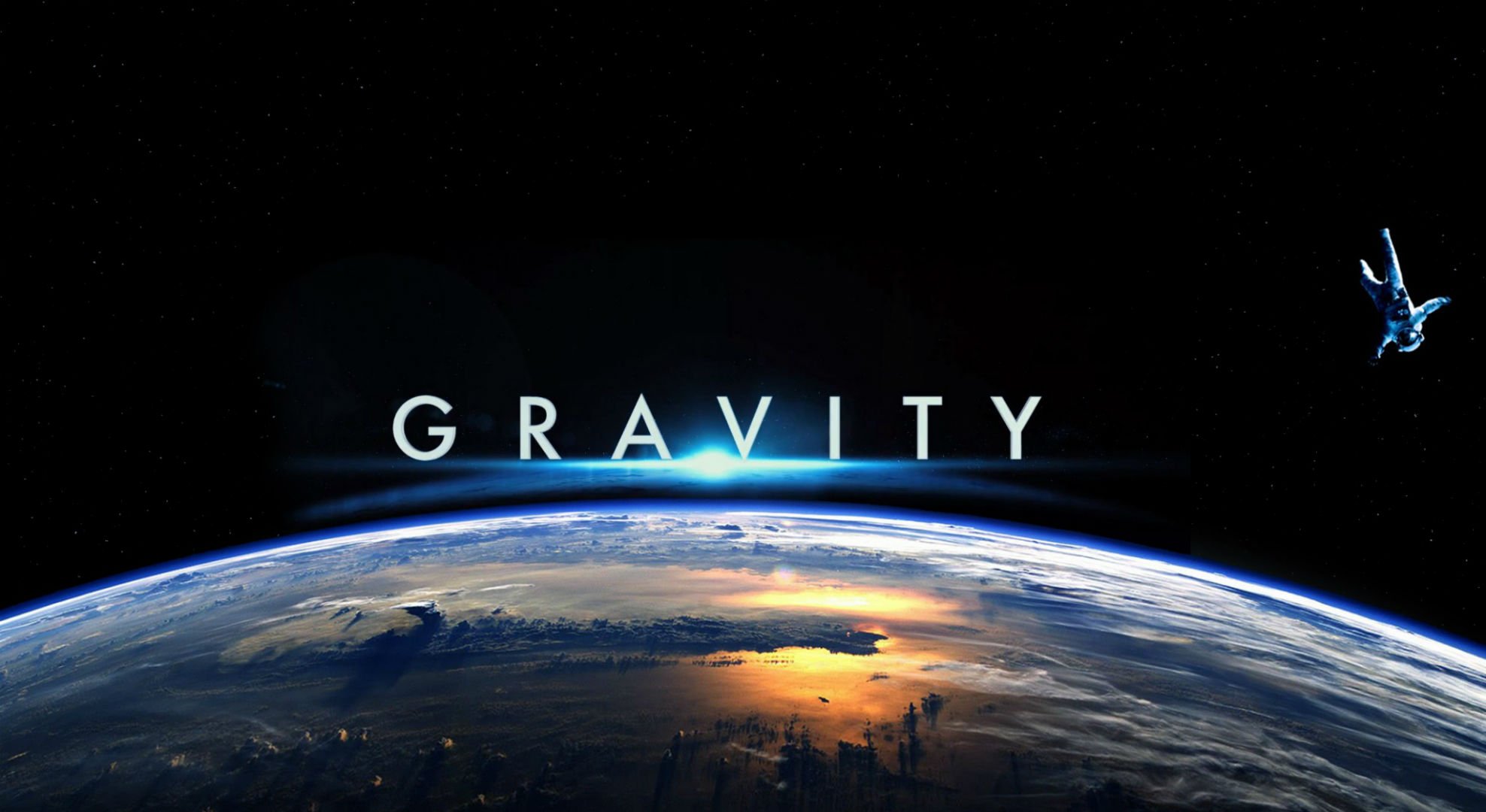
Gravity (2013)

Dr. Stone, a biomedical researcher on her first space mission, finds herself stranded alone in space, trying to make her way home. 

My rating: 3/5 stars


Interstellar (2014)

In the future, a blight is threatening  the Earth's ability to support crops. Scientists take the plunge through a wormhole near Saturn that they suspect was created by beings who are able to travel among five dimensions. On the other side, they hope to find a new world for the human race to inhabit. 

My rating: 4/5 stars

The Martian (2015)

Presumed dead after a tragic accident on a manned mission to Mars, Astronaut Mark Watney must find a way to survive and contact Earth. 

My rating: 5/5 stars


Comparison

While all of these movies feature space, return to Earth, some (varying degrees of) realistic science, and survival as common themes, there are quite a few differences between them. 

Gravity was my least favorite of the three, mostly because I really didn't like the main character. She seemed to have limited will to live and the relatively low interaction of characters didn't really float my boat. Much of her success seemed to rely on chance and, while it's certainly good to have a great series of challenges for characters, it felt like nothing at all went right. To me, it felt like more of a chance survival story than a true fight for survival. Others might disagree. 

Interstellar, in my opinion, had much stronger characters that had plights I could more readily relate to. One of the larger themes of the story is fighting for family. It also went beyond a simple survival story into some more abstract science concepts like wormholes, black holes, and the fifth dimension. The added science-y bits appeased my inner nerd. My main complaints about this movie were that it was really long and the ending felt a bit rushed. However, the intriguing concepts combined with the  internal conflicts of many of the characters. made for an interesting movie. 

The Martian was the funniest of the three. Watney's wit and humor added an extra layer to a movie that might have seemed dry and grim otherwise. Besides this, I found it more enjoyable than Gravity due to the fact that more characters are involved (we see some of the politics of what's going on back on Earth). Watney also has a strong will to live, even though he is far from unrealistic in his evaluation of the situation.  

All of these movies are PG-13, so don't go into them expecting them to be completely clean. If you like space-centered science fiction, I would recommend any of them. Even if you don't enjoy space movies, I'd still recommend The Martian. 

Have you seen any of these movies? What are your thoughts? And would you be interested in more articles like this in the future?

There will still be a Friday Fiction Fix this week, but I may be slow to respond to comments both on this post and on Friday's due to traveling. Happy Thanksgiving!

Tuesday, November 10, 2015

What is Speculative Fiction?

Okay, so this might be a bit of an easy post for me to write...but it's NaNo time!

Seeing as this blog is devoted to Christian Speculative Fiction, it might be useful to define what speculative fiction is.

Speculative fiction is a genre of literature that is based on the idea of creating an imaginary world in which the main story takes place.

You might argue that all fiction uses the concept of an imaginary world, but speculative fiction goes above and beyond by creating a setting for the novel that doesn’t exist. Regardless, it’s still a broad genre.

It’s a broad genre that doesn’t have hard edges, but we’ll try to nail it down a bit here.

The most commonly named speculative fiction “sub-genres” are Fantasy and Science Fiction. These two sub-genres are frequently lumped together, but they are broad in scope, containing everything from the space/time travel A Wrinkle in Time to epic fantasies such as The Lord of the Rings to science fiction classics such as Ender’s Game and the space opera series Star Wars. Each of these worlds has a different feeling, but they encompass just a small sampling of the speculative fiction field.

A speculative fiction author doesn’t always have to start from scratch to create his or her world. Alternate histories are an example of speculative fiction that uses a place (and even a “time”) that does/did exist. Many science fiction novels are set on a future earth that has different technology. While the place (Earth) is familiar, other parts of the setting are unfamiliar (such as alien species or intergalactic travel) and are products of the author’s imagination.

Another characteristic of speculative fiction is that a significant part of the work is devoted to world building. A Victorian Romance may include characters and places unique to that story, but the plot is more likely to revolve around original characters and their conflicts than the type of horse and carriage used by the characters in their quest to save the world.

In contrast, many speculative fiction authors focus on the technology, history, and even geography of their worlds to transport us to another realm that is almost entirely fictional. These stories tend to have a plot that is less personal and more grandiose—“let’s save the world!”, though there are certainly exceptions on both sides.

This presents challenges to spec-fic writers—how can we build a convincing story world that has high stakes without sacrificing character development? In a world that is strange, alien, and foreign, how can readers relate to the characters?

To any spec-fic writers out there, how do you focus on character development while building realistic worlds?


To any spec-fic readers, what books do you think did a great job world-building without sacrificing their characters? 

Also, thank you to all my readers! Over the weekend, I hit a total of 1,000 page views in the history of the blog, which is pretty exciting!

Friday, October 2, 2015

Friday Fiction Fix: "The Restorer"

The Short:

The Restorer
(The Sword of Lyric, Book 1)

By: Sharon Hinck

5/5 Stars

What: A frazzled housewife finds herself sucked into another world that is startling familiar and
yet altogether different.

Recommended to those who like: Christian fantasy, world travel, sword fighting.

The Long:

As you’ve probably noticed from most of my reviews, I tend to review more young adult and teen books than “adult” books (in part because there’s a better range of speculative fiction for young adults and teens than adults). This is the first book I’ve read that’s really centered on a middle-aged woman. And I liked it!

Throughout the story, we follow Susan. She can’t seem to keep up with the kids and everything else in her life. But when her husband prepares an attic getaway for her, she finds herself in a world where faith is a matter of life and death just as much as the sword play is. More frightening, the people here seem to think that she is meant to deliver them. She couldn’t even keep up with the kids’ lives—how is she supposed to restore a whole nation?

The story is a powerful mix of faith, fantasy, and some futuristic elements. I would highly recommend it to anyone who likes a fantasy story where Christian themes/ faith are a focus. The world building is excellent and unique. The characters are deep and intriguing. So many times, Christian fiction ends up a little short on internal conflict (at least in the speculative fiction genres). However, Ms. Hinck doesn’t hesitate to show her characters having the same doubts and fears that we all have.

If you’ve read the book, feel free to share your thoughts below. Please remember to be respectful of Ms. Hinck and her work, as well as other commentators. I also welcome comments on what you would like to see included in the reviews. I reserve the right to remove vulgar, hateful, or rude remarks from the comments. Thanks for sharing!

Tuesday, September 29, 2015

What is an Antihero?

Last week, Victoria J. suggested that I discuss antiheroes. I hate to admit it, but I had to look this one up, which makes it perfect for a post!

We've all heard of heroes. Superman, Luke Skywalker, Aragorn...pretty much every story has one or multiple heroes. They're courageous, honorable, and, well, just plain heroic. 

We're also familiar with the concept of villains: Sauron, Darth Vader, IT, The Joker, King Galbatorix, The Borg...they make us shudder, cringe, and desperately hope our hero either never encounters them or else defeats them easily (and neither of those options makes for a good story).

So, what is an antihero? They're not truly villainous and out to kill the hero (usually), but neither are they heroic, honorable, and courageous. They're more out for their own gain in some way or another.

From here

Take Han Solo, for example. He's not really the most honorable person (why else would he be found in a wretched hive of scum and villainy?). He's after money and girls and to save his own hide. He does heroic things, not because he's actually heroic, but because it's convenient. And we still manage to like him. He also does turn out to be a good guy in the end--but then he sorta migrates over to hero status. 

From here

 Another good example would be Captain Jack Sparrow, from Pirates of the Caribbean. He's a drunken pirate after girls, gold, and more rum (which always seems to be in short supply). Good gracious, his own crew committed mutiny against him. He's got an ego the size of the seven seas. He'll betray his friends for his own advantage. But he's not villainous like Davey Jones. We still root for him. 

From here

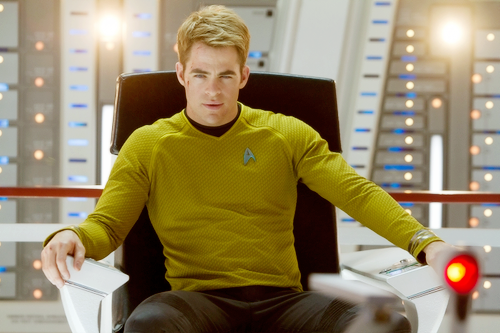
Last example, Captain Kirk from Star Trek (I apologize to all the real Trekkies out there; I can't get into the old movies/show. But the new ones are really good!). Again, astounding ego. He's a little closer to a hero (he's got some guts for sure). But he's not really out to be heroic for heroism's sake, at least at the beginning.

I apologize that these were pretty similar.  If you're into literary nerd-dom stuff, I'd recommend Hero, Second Class. It pretty much pokes fun at the whole idea of Heroes and Villains.

Thanks again for the suggestion, Victoria! I'm always open to article suggestions from any readers!

Who are your favorite antiheroes? 

Friday, September 11, 2015

Sequel Review: "The Hero's Lot"

This week I'm reviewing The Hero's Lot, sequel to A Cast of Stones. I would highly recommend reading the excellent first book before continuing. Come back next week for a fresh series/book!

The Short:

The Hero’s Lot
(The Staff and the Sword, Book 2)

By: Patrick W. Carr

5/5 Stars (And going on the favorites shelf)

What: Errol is put under compulsion by the church to kill Valon or die trying. He is rejoined by familiar characters from the previous book

Recommended to those who like: Sword fights, fantasy, Christian fiction, (and have read book one)

The Long:

If you haven’t read book one, don’t continue! This review may ruin the first book for you!

Wow. I really just cannot say enough about these books! The writing is excellent, the plots are gripping, and the characters are loveable and believable. I purchased book three right away, even though I probably should’ve waited.

Errol continues to be the main focus of our travels, though we also spend a significant amount of time with Martin. His character is still deeply flawed and complex, but he’s loveable. Relatable. Human.  He’s definitely one of my favorite characters.

Put under compulsion by the church, Errol must travel south to Merakh and kill Valon or die in the attempt (and certain authorities wouldn't mind the latter in the least). He enlists the help of familiar friends, as well as new ones. Their trip is fraught with danger, lots of sword fights, and the ongoing political and religious struggles for power that were hinted at in the previous book.

There’s a great plot twist/ reveal in the middle of the book that really ups the stakes and the action. I wish I could talk about it more, but you’ll just have to read the book to find out what it is!

Again, I can’t get over these books. This is some of the best writing that I’ve read in a long time—it sucks me right into the story. Mr. Carr is a master of his craft and I look forward to reading more of his books in the near future.

If you’ve read the book, feel free to share your thoughts below. Please remember to be respectful of Mr. Carr and his work, as well as other commentators. I also welcome comments on what you would like to see included in the reviews. I reserve the right to remove vulgar, hateful, or rude remarks from the comments. Thanks for sharing!

Tuesday, August 11, 2015

Why Every Character Should Have a Zoo Hat

I'll be the first to tell you that characters are my writing weakness. I'm what's called a plot-first novelist, meaning that I typically come up with a plotline for a story before I come up with characters. As a result, my characters often behave erratically and feel, well, flat. 

And that's why every character needs a zoo hat.

First, let me give you a little background (because you're probably really confused right now).

For the past several summers, I've volunteered at a local zoo. I'm now employed by them (no, I don't feed the lions, but I do get to work with some really ornery goats). Since I sunburn easily, I typically wear hats whenever I'm outside.

So, my first summer as a volunteer, I got a ball cap. I wore it every day to the point where it was faded out.

Last summer, I worked at a different job and took the summer off from the zoo. When I came back this year as an employee, hardly anybody recognized me. It took me a while to figure out why.

Then it clicked--I wasn't wearing my hat anymore. Everyone had identified me by my hat.
The wolf hat I wore nearly every day I volunteered. It's not quite the shade of blue it used to be, but I still wear it!


Now what does this have to do with characters?

Every major character should have some trait that makes them easily recognizable and unique.

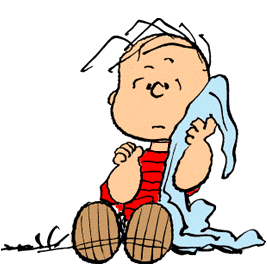
For example, one of the characters in my WIP drinks coffee in excess. If she just drank coffee, she'd still be rather flat. So she has other character traits (she's an impatient doctor who's hiding something and doubts her faith, to name a few things). But, her coffee habit makes her feel real. It's a quirk; something that makes her stand out from the other characters, just as I stand out at work because few of my coworkers wear hats. Another type of "hat" would be Linus (from The Peanuts/ Snoopy) and his blanket. He wouldn't be Linus without the blanket.

Linus and his security blanket, from http://peanuts.wikia.com/wiki/Linus'_security_blanket


Of course, they can't all wear hats--or else that would cease to be a quirk. Nor can that be their only trait. There are other traits that make me "me" at work--what jobs I like to do, pet phrases, character flaws, etc. Each character should have a unique combination of those as well as his or her "hat".

Small details--the "hats"--rarely affect the plot of the story. But these unique characteristics make the characters more life-like.

Don't be afraid to allow character quirks (as well as the character's overall personality) to change throughout the course of your writing. As long as the reader can see why it changed and the change is still in keeping with the nature of the character, change is a good way to show character growth. This is a close call; you don't want to make your character completely new to your readers, but you don't want them to stagnate, either. Perhaps your character adds a new picture to her locket (while still keeping the old picture of her parents in there). Or after his house burning down with his favorite book inside, your character finds a new favorite book that speaks to him more after his trials. Or perhaps they just
get a new hat, like me:


Any questions? What quirks do your characters have? In a book you've read, what's your favorite character quirk?