Showing posts with label worldbuilding. Show all posts

Tuesday, February 6, 2018

Reality, Meet Fiction: Sporting Events

Reality:

This week is a big week in American sports. The Superbowl (championships for the National Football League--American Football, of course) was on Sunday. This Thursday marks the kick off of the Winter Olympics in Pyeongchang, South Korea, which should be interesting as well. 

Regardless of how sporty you are (personally, I'm watching the Yukon Quest sled dog race over football), these events give some insight into national mentality. 

Not only does it show that we have enough time, leisure, and extra money to pay people millions of dollars to play for our entertainment, but it offers insight into what Americans value. 

And you don't get much more American than the Superbowl. Home celebrations center around greasy, overly sweet, and spicy foods accompanied by mass amounts of pop and (depending on the group) alcoholic beverages while yelling at the television. The event itself is subject to huge marketing, with some people just watching it for the commercials. Beyond this, it focuses largely on many typical American things, notably the military; this year, a WWII vet did the coin toss at the beginning of the game and, as for many big sporting events, there was a flyover by the Air Force at the start of the game. National pride definitely shines through in American Football, in spite of any politics that may have taken center stage earlier in the season.

Fiction:

How can you utilize sports or recreational events to show part of your world's culture? Do they compete for religious reasons? Or is it pure entertainment? 

Are there stereotypes about people who are fans of a particular sport? (Loud, obnoxious, nerdy, fanatical, etc.) Are certain sports more popular than others? Are nations associated with a particular sport? (It's American as baseball and apple pie).

What sort of marketing goes into the sports your culture values? How does that reflect on the culture at large? 

Are there stereotypes of people who compete in different sports? Are they considered violent? Stupid? Smart? Patient? Skilled? Graceful?

What's your favorite sport to watch? Are you looking forward to the Olympics?

Tuesday, January 16, 2018

Reality, Meet Fiction: Transportation and Weather

Reality:


It's been a snowy winter here in the midwest and we aren't even in the depths of the season yet. This is the first year I've owned a car, so it's given me a new perspective on how weather affects transportation.

For college, I moved one state north. While we don't get terribly much more snow here than I did back home, peoples' attitudes are quite different. In my home state, we were regularly given updates on road conditions by county and the roads were sometimes completely closed to allow for the plow trucks to clear them faster. People tend to drive quite slowly and carefully. Mention of a snowstorm sends people running to the stores for bread and milk days in advance.

Here, people just charge out into the snow with seemingly no concern for their own safety. Snow plows are rarely seen (or used, from the looks of the roads some days). Traveling is entirely at your own discretion. Rather than using "rumble strips" (a textured strip of pavement that makes a loud noise when you drive over it) only on the sides of the road, they're present in between lanes/directions of traffic as well. And it's a good thing--you frequently can't see the lines on the pavement.

Fiction:

How can you leverage the intersection of travel and weather in your story? Does your character know how to drive on snow? Does the airport have de-icer for airplane wings? Do roads close down when it's snowy? Does the rental car come with an ice scraper to clear off the windshield? What are your characters' opinions of what weather is safe to travel in? Do characters in a certain region own different vehicles to make travel easier?

Of course, even space has weather. How do solar storms impact spaceflight? Does your galaxy have seasons of planet alignment that are more favorable for travel?

Tuesday, September 12, 2017

Reality, Meet Fiction: Disaster Response

Reality: 
Three hurricanes: Katia (far left, toward Mexico), Irma (center),
and Jose (right).
Picture from NOAA.

The past month has been incredible with regard to natural disasters in the United States. Wildfires in the west are on track to be the third worst in the past decade, with more than 26,000 firefighters working to keep the fires at bay. The National Guard (part of the reserve armed forces that states call in for extra support, roughly equivalent to modern-day militia) has been called into action in four states to assist governmental efforts.

Meanwhile, the American South is facing a horrifying series of hurricanes. Harvey, the first major hurricane (Category 3-5) to hit the U.S. since 2005, made landfall on August 25th as the wettest hurricane to hit the United States in recorded history, devastating many Texas cities and overflowing levees. The President has requested 6 billion US dollars to be placed toward relief efforts.

At the writing of this post, the next major hurricane, Irma, is lurking off the coast of Florida. Prior to making landfall in the Caribbean, it was one of the most powerful Atlantic hurricanes recorded, with wind speeds at 185 miles per hour, placing it solidly in Category 5. It's still a threatening Category 4 hurricane. Approximately 1/4 of the Florida population has been evacuated at this time, possibly the largest evacuation attempt in U.S. history. Further emergency funding has been requested for FEMA, the federal emergency relief organization, which is already stretched thin by Harvey. The entire Florida National Guard has been called into active duty. 

Unfortunately, the danger doesn't seem to be over yet. Jose, a Category 4 hurricane, is following close in the wake of Irma, scheduled to strike many of the same Caribbean Islands so recently devastated by Irma. 

In addition to FEMA and other national agencies, many private organizations, such as the American Red Cross and various church bodies, have mobilized in response to the various disasters. Foreign aid has also been offered by other countries. 

Fiction:

How do people in your story world respond to disasters--natural or otherwise? Are there alliances they can rely upon to pull in aid from other non-affected countries? Is there a central government that provides relief? If so, how does that government determine where funds are used? 

Are local efforts coordinated, such as a fire brigade? Are local charities seen as more helpful than larger ones? Who organizes things at "ground level"? Is it civilians, civilian officials (such as the mayor), the clergy, the military, influential people, or something else? 

Do people organize trips to help those in need, or is there an attitude that each group should fend for themselves? 

How is money raised for relief efforts? Does it come from donations? Fundraisers? Taxes? How do organizations decide where the funds should go--alliances, favors, favored groups, etc.? 

How does the media cover disasters? Do they flee or provide on-the-ground reporting? If multiple disasters occur in quick succession, what determines which disasters receive the most attention? 

What disasters have occurred recently in your area or country? How has your community responded? 

Tuesday, September 5, 2017

Reality, Meet Fiction: Architecture


A view of the Berlin governmental district across the river Spree.
The dome pictured is the Reichstag Building, where the
German Parliament meets.

Reality:

Growing up in the Midwest, my exposure to different types of architecture was rather limited. My home state is only a little over 200 years old, so old buildings are hard to come by. If they do exist, they're typically simple structures, such as log cabins. One of my favorite aspects of Germany was the variety of architecture present in the country and the stories behind their design.

One building that had a particularly interesting story was the Reichstag building, seat of the German Parliament, or Bundestag.

The building originally housed the Reichstag (Imperial Diet) during the time of the German Empire. When it was succeeded by the Weimar Republic, it housed the Reichstag, or Parliament. 

However, just before Hitler came to power, it burned down under mysterious circumstances. Some hypothesize that the Nazi party was responsible for the fire, which gave them an excuse to arrest political enemies immediately prior to electing Hitler as Chancellor. 

Throughout the Nazi era, the building was left mostly unoccupied and in deteriorating condition as WWII raged on. 
Courtesy of Avda
(I wish I could take credit for such a nice picture.)

The building was repaired more fully during the Cold War, but the German Parliament, now called the Bundestag, did not return to the building until after German reunification in the 1990's. The current glass dome was built on top to replace the cupola that had been destroyed. It is made of glass to symbolize transparency in government, a theme that is repeated throughout most governmental buildings, which also utilize large windows. Walkways allow visitors to climb to the top of the dome, symbolizing that the people are above the government. 

In short, the building's architecture tells the story of a nation that has faced many trials in the past few centuries. 

Fiction: 

Perhaps the nations you feature in your book have a more straightforward history than modern Germany, but how can you have architecture tell a story within your story?

Why did your characters (or their government) decide on a certain style of architecture? Is it due to the region's climate and available materials as a primitive society? Does it represent part of their religion? 

Does your nation honor past rulers with statues and monuments? Or do they eschew such gestures due to a checkered or short past? 

Does your nation's architecture reveal any of their fears--fears of peasant revolt, invasion, dictatorship, etc? How can these be revealed in the architecture? Is it well fortified, or does it have more of an open design? 

Does your nation's architecture reveal their values? Is this reflected in materials they use (or don't use)? If they value fresh air, are large windows present? If they value strength, do they rely on materials they consider strong? Are buildings designed to be beautiful or utilitarian? 

How long has your nation been in existence? Do they value buildings from older, former kingdoms? Or do they feel the need to replace these buildings and place their own mark on the world? Have wars or natural disasters impacted which buildings remain? 

What buildings or styles have cultural significance? Have certain buildings served important purposes in the past? What buildings would your nation choose to rebuild if they were destroyed?

What buildings do you know of with an interesting backstory?

Tuesday, August 29, 2017

Reality, Meet Fiction: Translation

Zion Church in Berlin, the site of one
 of a handful of
underground print shops in
communist East Berlin.
As you may have noticed, my posting schedule decreased for a while as I was gone in Germany. This is the first of (hopefully) several posts that was partially inspired by the trip. 


Reality: 

While most people in Germany speak a fair bit of English, there were a number of times where our group leader had to translate signs or tours for us, especially if the subject was rather technical or if we were along on a German-only tour. 

Whether it's just his personality or the fact that he's a physicist, our guide tended to shorten things quite a bit for us to understand. Occasionally, with my (very, very) limited amount of German, I could tell that he was omitting some parts of the narrative or making them more succinct for our understanding. (This was totally fine with me, because being in a country where pretty much everyone seems to be at least bi-lingual, it's embarrassing to admit that you only speak one language and I also felt like I was an inconvenience to native speakers by needing everything translated).

However, when translation got really interesting was when there was a flurry of back-and-forth rapid German between our group leader and the tour guide, followed by a quick consultation with another bi-lingual speaker in the group. The result of this conversation usually began with a statement in English something along the lines of, "I don't think you have a word for it, but it's a similar concept to..." followed by a few sentence description of what was probably one word in German. A couple of times, he also added, "It's pretty much untranslatable."

Even though I went into the trip realizing that different languages don't always have a word-for-word equivalence of concepts, it surprised me how frequently these exchanges occurred and how narrow one language can be for expressing ideas.

Fiction:

While it's common to see multiple languages used in fantasy books, I don't think I've run across the idea of something being lost in translation. It would be a cool concept to utilize more frequently.

What factors influence what each language in your story has vocabulary for? For example, a sea-faring society likely has more words for nautical and marine terms than a desert society. How can this cause confusion in translation between characters?

Are certain languages considered valuable to learn for economic or social reasons? Are others looked down upon for being local dialects?

Is there a trade language or a language that most characters are expected to learn? Do certain professions require training in a certain language? (Church work in the Middle Ages and Latin). What factors influence what language(s) your characters know--schooling, social class, occupation, country of residence, language spoken at home, age, etc.?

Are certain languages considered more difficult to learn? How are languages in your storyworld related? What history--conquests, trade, etc.--affects shared vocabulary or similar syntax?

Have you traveled to a country that doesn't speak your native language? What was the experience like?

Tuesday, April 18, 2017

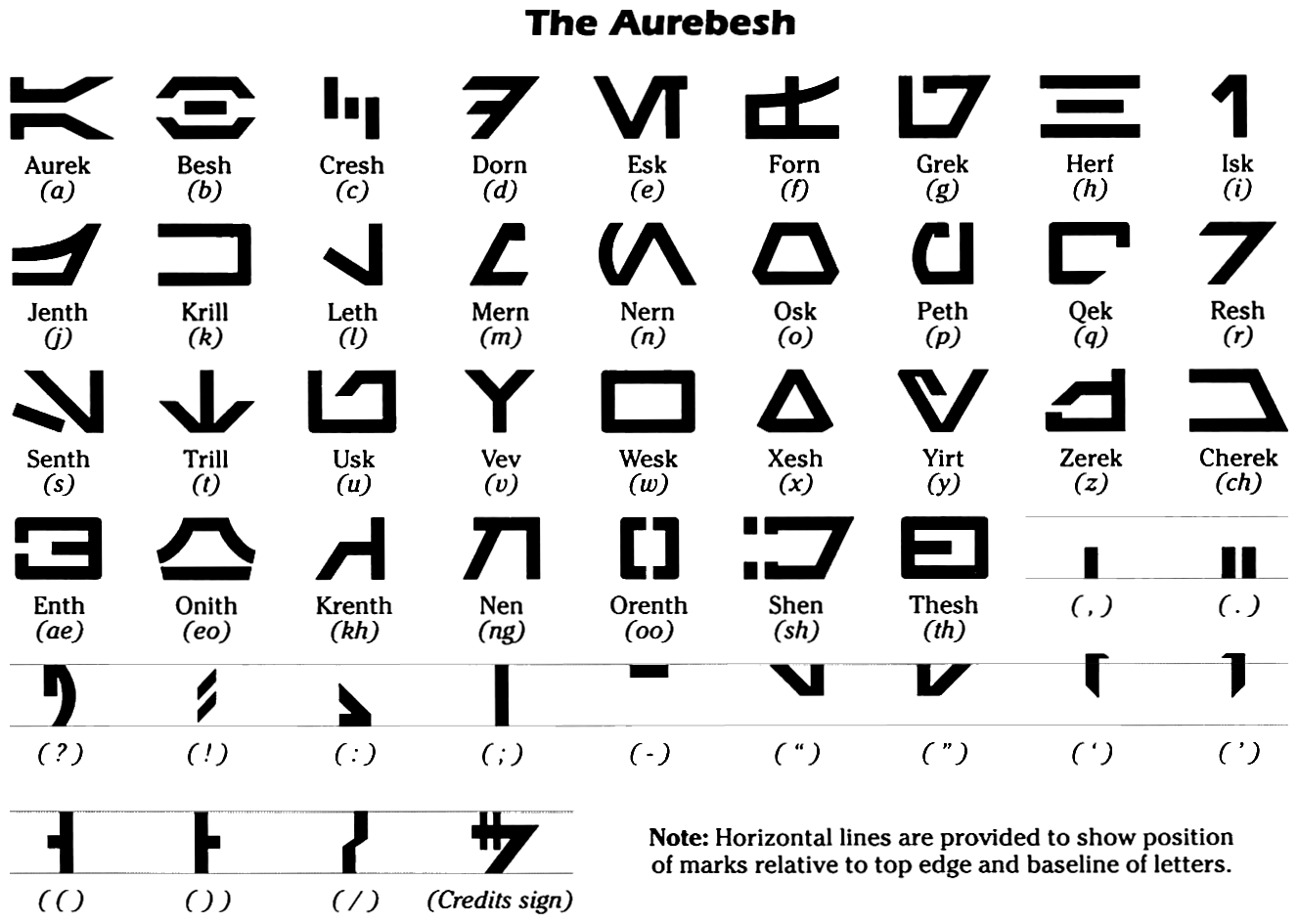
Reality, Meet Fiction: Alphabets

The Star Wars Allphabet

Reality:


Those of us in the Western world, especially in the western hemisphere, find it easy to take for granted the fact that we (typically) use the Latin alphabet. The Oxford dictionary defines the alphabet as "a set of letters or symbols in a fixed order used to represent the basic set of speech sounds of a language..."

However, there are many other alphabets in the world, such as the Cyrillic (which Russian uses), Greek, or Arabic alphabets. Some don't include vowels, such as Hebrew and Arabic, in which case, they are referred to as "abjads".

Most alphabets we would think of are considered linear, meaning that they are designed to be written on paper. However, there are non-linear systems in existence, such as Braille.

Fiction: 


If your characters are literate, launch some confusion upon them by introducing some different alphabets. Have different writing systems used in different parts of the country, or have them travel to a foreign country where they can speak, but not write.

Consider the number of letters in an alphabet and how that might affect electronics and their practicality for your characters to use them. How has technology influenced the style of writing? Carved letters might tend to be blockier, while handwritten letters might be smoother in nature. Do the machines in your story that read writing need a certain type of script to be able to identify letters? How does the number of letters in your alphabet affect spelling, contractions, or signage for the story?

Really, the possibilities are endless. Enjoy thinking up some ways for writing and alphabets to play into your characters' lives!

Tuesday, February 14, 2017

Reality, Meet Fiction: Weather

Reality:

This year has been an oddly mild winter for my hometown, which happens every handful of years. For example, last week, we had one day that was 30 degrees (F) warmer than the average. I comfortably wore a short sleeve shirt and jeans while walking the dogs.

The next day, it was an average day. I wore a coat and was considering breaking out my ear muffs and gloves.

Most of the residents shrugged it off. It's not uncommon for us to have relatively extreme swings in the weather. We even make jokes about it--"You know you're from ---- if you have to run the heater and the A/C in the same day." 

On the other hand, the average highs for San Diego, California vary about 10 degrees Fahrenheit all year. 

Let's just say I don't live in California. (That leaves you 49 more states to choose from, if you're trying to track down my secret identity ;) )

Fiction:

Even if you don't decide to unleash a natural disaster on your characters, mundane weather can cause quite the stir and provide an opportunity for conflict amongst your cast. 

If you have a character from a warm climate who has to travel to a cold climate, perhaps they can't find the clothing they feel they need to stay warm. What if they don't know how to use an ice scraper to scrape off their getaway vehicle? What if they don't know how to drive on snow? You can always have them be confused by the buckets of salt/ice melt that are kept by the doors if you need some comic relief.

Conversely, have your cold-weather character confused by why air-conditioning is necessary, or how hot the insides of cars get in the summer sun, or the fact that you can theoretically fry an egg on asphalt--and that there's a town with a festival devoted to doing so.

How do your characters handle sunburn? Windburn? Frostbite? Are these concepts that they're familiar with? 

How does the climate or weather affect the style of housing your characters live in? For example, historic homes in the American South typically have large breezeways so that there can be more airflow on stifling summer days. Areas that receive high amounts of snowfall are likely to have buildings with steeply pitched roofs that allow the snow to slide off. 

How does the climate affect what foods are available to your characters? How about what foods they want? (Ex. a person in a hot climate may be less likely to spend time developing "heavy" meals or stews, but focus on lighter fare instead). 

What's something quirky about the weather where you live?

Tuesday, January 24, 2017

Reality, Meet Fiction: Time

Free stock photo of wristwatch, time, watch, clockReality:

Have you ever considered how you view time? When someone says you have a meeting at 9 AM, do you view it as an obligation to be there at that time? Five minutes before? Within ten minutes? Would you say time is money? Would you say that you spent, saved, invested, or wasted time? Is the present the most important? What are your opinions of the past or the future?

We all view time a little bit differently--not only how it passes, but how it affects us. We place different values on how long we should spend on activities, consider time more or less urgent, have different opinions on timeliness and meetings...the list goes on. Some of us wear watches and have wall-clocks, while others can leave their watch set at completely the wrong time and not notice. 

Different societies have different perceptions of time. For some, time is linear. For others, time moves in never-ending cycles. Some societies depend on clocks, while others move with the natural rhythms of the day and the year. 

Fiction:

The possibilities for the use of time in your book are nearly endless. How can you bring your characters into conflict using their differing perceptions of time? Does one character value time differently and is late to every meeting? Does someone think decisions should be approached more slowly while the other character views every moment as precious?

How do your characters keep track of time? Do they have calendars? Are they solar or lunar based? Do they rely on cycles of the moon to determine months? When does the day start--7AM each day, or at the break of dawn? Do they meet at 0200, the second watch of the night, or when a certain star meets the horizon? Do they measure seconds? Minutes? Or degrees of the sun? 

When does the year begin or end? Does it correspond with something?

Do your characters think they can speed things up? (The American who wants to rush through traffic.) Or is time inevitable and will move at its own pace? (The farmer who cannot change how his crops grow). 

Does your world have time zones? Daylight savings time? If you're dealing with different planets, do they have different lengths of days and years? How do your characters reconcile that? Do your characters have weeks--that odd unit of measurement? 

Do characters keep the same schedule each day--are you expected to sleep for a certain period every day, or is there a different schedule? Does everyone start the day at the same time across the globe? Or is it dependent on sunrise? Do factories have a second or third shift that is less desirable? Are certain activities expected at certain times--bathing morning or evening, but not in the middle of the day; eating beginning, middle, or end of the day?

What about night owls and early birds? Is one valued in your culture? Is one looked down upon? Is there a time of night when fewer people are out? Are there times it's acceptable to contact people (no phone calls after 9 PM)? Is there a time of day when everyone is expected to be up?

What parts of the culture influence these things? Is it an agrarian society in tune with the seasons and nature? An industrial society? A multi-planetary society? How do they adapt when interacting with others from different cultures?

Further Reading on Cultural Differences Regarding Time

http://www.businessinsider.com/how-different-cultures-understand-time-2014-5
https://www.ncbi.nlm.nih.gov/pmc/articles/PMC1369268/

What's one thing you consider odd about time? 

Tuesday, December 13, 2016

Reality, Meet Fiction: Holidays

It's been a while since we've had a world-building article. I hope this provides you with some good food for thought with regard to your story. 

Reality: 

At least in the U.S., November and December  are considered to be the holiday season. Christmas tends to dominate the season, but New Year's and Thanksgiving are widely celebrated and observed as well. 

Holidays are celebrated for various reasons, including religion (Christmas, Easter, Hanukkah), memorial reasons (Patriot's Day, Memorial Day, Veteran's Day), or calendar changes (The New Year). Celebrations may consist of meals, reflection, music, time with family, services, or other observances.

Fiction: 

What holidays do your characters celebrate? Why? Are there disagreements about what holidays should be celebrated (differences in religion, for example)?  Or are there disagreements about how holidays should be celebrated (going to church on Christmas morning vs. spending time with family)? Does everyone agree on what date the holiday should be celebrated? Is it expected that people will greet people a certain way during the holiday season (Merry Christmas vs. Happy Holidays; "He is Risen" on Easter)?

How are the holidays observed? Is there a specific meal that should be eaten? (For example, eating pork for good luck on New Year's Day or observing the Passover supper). Are there specific decorations? How about music? Activities? How do activities vary by age group? Gender? What roles do various people play? Does the youngest or oldest child have a particular part to play?

What attitude should be maintained on holidays? Is it reflective, such as for Memorial Day, or jovial, as for Christmas? 

How long does the holiday last? Is there a preparatory period before the holiday (Lent prior to Easter)? If so, does it have a different "feel" than the actual holiday? How do preparations contribute to the actual holiday?

Did you invent any holidays for your books?

If you haven't already, please take a moment to fill out the survey in the right-hand column. Thanks in advance!

Tuesday, August 2, 2016

Reality, Meet Fiction: Natural Disasters

A while back, I covered man-made disasters. Today, we tackle the forces of nature and investigate how they can wreak havoc upon your characters. *Mwahahahaa*

*Ahem*.

Reality:

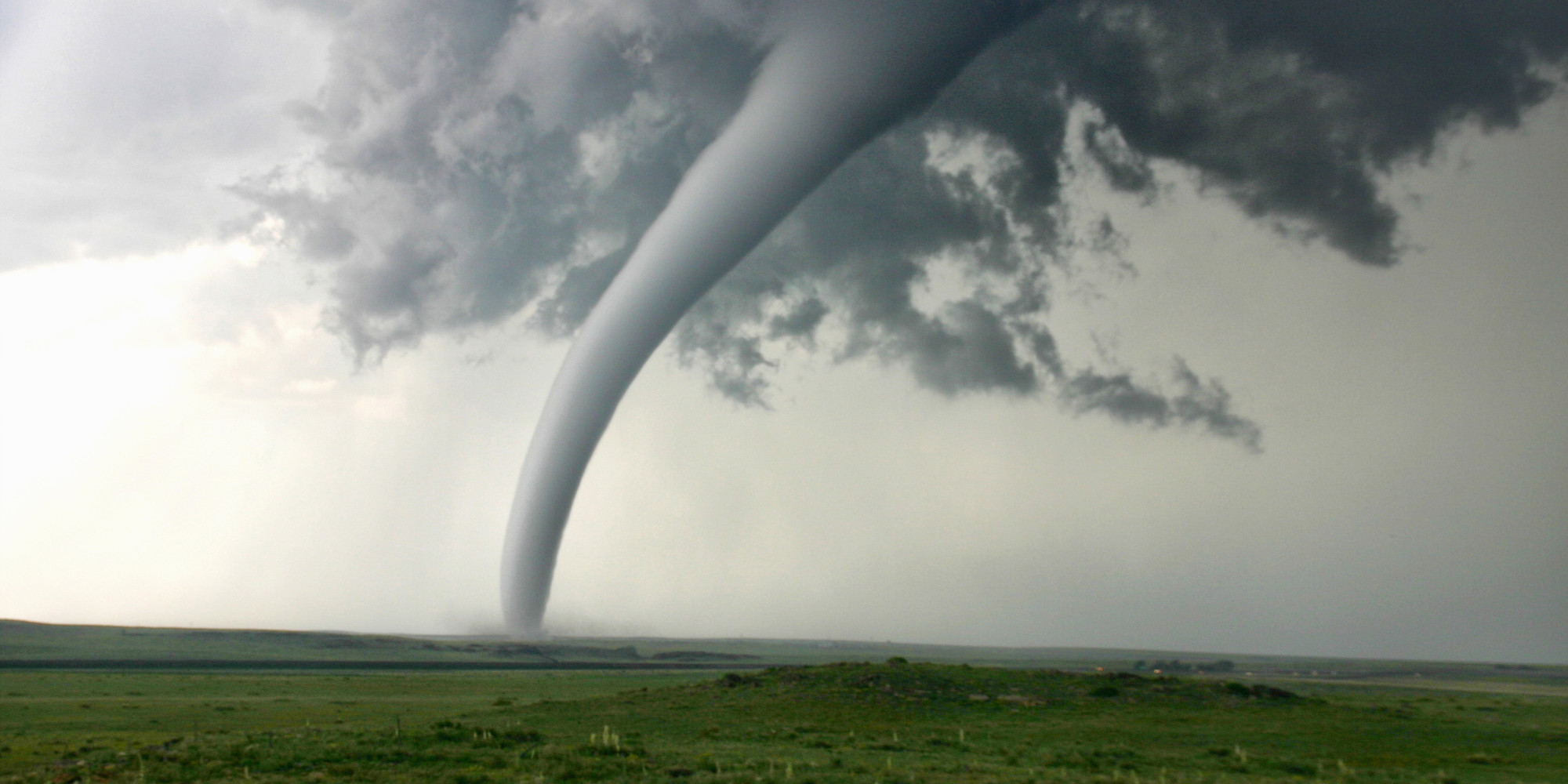
Honestly, I could probably do an entire series on natural disasters. They come in all varieties. Hurricanes, tornadoes, mudslides, avalanches, earthquakes, droughts, blights...the list is endless.


While the disasters themselves are, well, disastrous, sometimes the aftermath is what causes more trouble for the people involved. For example, flooding following a hurricane can cause sanitation breakdown, which in turn can create a breeding ground for disease. Or, fires after an earthquake can add to the confusion and devastation. 

There's also the issue of what to do with survivors. Relocation and rebuilding processes can take years. The economy of the region could be set back several years and many businesses may never return. Fear of another similar disaster could dissuade residents from returning. Or, depending on the type of disaster, the region may become completely uninhabitable. 

Fiction:

How can you leverage natural disasters and their aftereffects in your book? 

What disasters occur in  your world? How do they differ by geographical region? How frequent are disasters? What changes in lifestyle or architecture have people made in order to minimize the effects of cataclysmic events? (Examples: storm cellars in tornado alley, evacuation routes in hurricane-prone areas, "earthquake proof" buildings).

Do disasters occur on a regular basis? Is there any way to predict them? What events lead up to each disaster? Are there certain seasons where disasters are more likely?

What response teams are in place for after a disaster? Is there something similar to FEMA that steps in to provide aid for survivors, or are they left on their own? 

How are natural disasters viewed? If you're writing fantasy, do people believe that deities are responsible for the disaster? If so, what steps might they take in an attempt to prevent another disaster from occurring? (The Kinsman Chronicles by Jill Williamson and Legends of Karac Tor by D. Barkley Briggs provide some good examples of this.)

What problems occur after a certain type of disaster? Are there steps to prevent disease from spreading? Do people tend to move out of disaster-stricken areas, or do they stay in their homes? What motivates their decision? (Example: some civilizations would continue to settle on volcano slopes, since the soil was very fertile).

How do natural disasters provide motivation, barriers, or opportunities for your characters?

What natural disasters are likely in your area? How do you prepare?

What natural disaster are you most proud of incorporating into your book? Did you create any new types of disaster for your book?

Tuesday, July 26, 2016

Reality, Meet Fiction: Transportation

So, this past week, I was blessed to be able to volunteer for the largest gathering of youth in my church denomination. Imagine 25,000 youth singing, getting no sleep, doing service projects, getting dehydrated, worshiping God, smelling terrible, and having a blast, and you have a good idea of what the event was like. My job was to make sure said 25,000 youth didn't run over each other as they filed into the stadium to worship each evening.

But, to get to the host city, I first rode on a bus for 21 hours with 45 strangers and 1 person I knew. Which brings us to today's subject: Transportation.


The wonderful group of volunteers I worked with!

Reality:

There are thousands of ways we travel in reality: bus, train, plane, walking, bicycle, trolley, skiing, boats...and you're probably aware of more than I could think to bring up in this article. 

Each mode of transportation has different advantages and disadvantages. I chose to take a 21 hour bus ride because it was less expensive than flying, I would be riding with other people going to the youth gathering (even though they were strangers), and because I don't have the patience for airport security. The downside was the travel time and discomfort of being on a bus for that long. 

Transportation methods have their limitations. I couldn't take a bus from North America to Australia, for instance. (Even though I would love to visit the wonderful Victoria Jackson, who was kind enough to guest post for me while I was gone last week). It's hard to take a boat when the lake's frozen over. 

Fiction:

Why do your characters choose to travel the way they do in your story? Is one of them a wanted person, so they can't go through airport security? Is one afraid of water and refuses to take a boat? Are finances an issue? Are certain classes of people forbidden from using particular means of transportation?

If your world has individual transportation (like cars), is a licensing process required? How rigorous is it? Does it have an awful test like maneuverability that many people flunk? (Glares at whoever decided maneuverability was a good test to devise). Are there fees that limit operation to the rich? Are certain physical capabilities, such as reflex speed, considered? How does this exclude people from using this form of transport?

Like space travel, are only a few people trained in some form of transport? Are certain types of travel particularly desirable jobs to hold? Are some undesirable? What are the dangers associated with each form of travel?

Are certain means of transportation limited by weather or geographical region? Are some types of transport culturally significant? (Perhaps used in burial rituals).

What's your favorite way to travel? 

I'd love it if you'd answer the poll in the right-hand column. I'm trying to see where else I should post my reviews. Thanks in advance!

Tuesday, July 12, 2016

Reality, Meet Fiction: Humans and Animals

Reality: 

People place different values on various animals in different cultures. For example, Hindus hold cows as sacred. Other groups, such as Jews and Muslims, believe that pigs and certain other animals are "unclean" and should not be touched or consumed.

Some cultures consume horses, guinea pigs, or dogs, but people in other cultures that have these animals as pets might find this odd or even offensive.

Even the idea of pets and working animals varies between cultures. Some people rely heavily on animals for working fields, herding other animals, or other duties, while others might see the same animal as a source of company.

Lady, my first dog. She's gotten a bit more gray and she's
half blind, but she still knows where the treats are!

Fiction:

The fictional opportunities presented by this topic are nearly limitless. Do you have "normal" animals in your world? Or are there different creatures than what exist on Earth?

What do different cultures use these animals for? Food? Fiber? Work? Milk? Companionship? Each character will attach different values/uses to individual animals or whole species. How can you use these different values to bring conflict to the story?

What dangers does having/not having an animal pose? How can an animal's skills be used to benefit your characters?

What laws are associated with animals? Are there quarantine rules? Are only certain social classes permitted to own certain types of animals? Could coming into contact with other animals lower your character's social status?

How do animals relate to one another? Predator/prey? If so, are there conflicts between animals?

What are thoughts on keeping animals in captivity? Do you have zoos? Do people object to zoos on a moral basis?

How intelligent are your fictional animals? Do they have certain powers or abilities that make them useful? What makes an animal socially acceptable? Are some revered for abilities they have?

As always, I hope that provided you with some good food for thought. Do you have any pets or favorite animals?

Starting tomorrow, I will be taking a much needed vacation, so I will be slow to respond to comments and emails. Posting will continue as normal and I would still love to hear from you!

Tuesday, June 28, 2016

Reality, Meet Fiction: Treaties

Reality:

This week has certainly been interesting with regard to world news. Great Britain decided on June 23rd to leave the European Union. It will be interesting to see the long-reaching effects the move will have on immigration and the world economy.

Source


While the EU is an economically-centered alliance, it certainly calls to mind older alliances that were more centered on military help. And while these alliances were often helpful, one has to look no further than WWI to see some of the disastrous consequences that treaties could bring.

Fiction:

If you have multiple countries in your storyworld, how can you use them and their treaties to your advantage as an author?

Why has your country made (or avoided making) treaties? Is there something in its past? What does your country seek to gain by making a treaty? What does the reciprocating nation hope to achieve? What strengths, weaknesses, and characteristics does this reveal about your countries?

Is your alliance primarily economically based, focusing on trade, currency, and regulations? Or is it primarily militaristic in nature? How has this changed the cultures of the two countries? Has increased trade diluted your national culture? If so, what's the opinion of the people?

What disadvantages are there to being part of this trade agreement or alliance? Do other countries drain your country's monetary resources? Does it dilute or change culture? Could being part of a military alliance drag your country into a war?

Although this was shorter than normal, I hope it gave you some good food for thought! 

I still have guest posting opportunities available for mid-July. Contact me soon with your ideas!

Tuesday, June 21, 2016

Reality, Meet Fiction: Man-Made Disasters

Reality:
Just over thirty years ago, the Chernobyl nuclear power plant disaster rocked the world. Equipment failure, human error, and other factors created the worst nuclear power plant disaster to date. The effects can be seen even today, with nearby cities still largely abandoned. A new containment facility is currently being built to attempt to contain the still-dangerous radiation.

Chernobyl Today (Wikipedia)
Five years ago, the Fukushima nuclear accident, triggered by a tsunami, re-ignited fears and concerns about nuclear energy.

These accidents, especially Chernobyl, have raised global concerns over the safety of nuclear energy. This is relevant as nations search for alternatives to fossil fuels.

Fiction:

Your world might not use nuclear energy, but what sorts of man-made disasters influence your world?

Did a magician cast a certain type of spell with disastrous consequences? How did the public or governing bodies react? New laws? Prohibition of magic? Scorn of sorcerers?

How does your storyworld's past (or present) shape its future? What barriers and challenges does this present to your characters? Do they have different opinions on the disaster? How has it shaped their lives? Technology in use?

Fun Fact:
-A coast-to-coast flight in the U.S. is about equivalent to 3 days of natural background radiation exposure. (radiologyinfo.org)


Well, I hope this wasn't too depressing. Do any of your stories integrate man-made disasters?

If anyone is interested, I have a couple of guest-posting opportunities coming up in mid-July! Contact me with your idea using the contact form in the left-hand column.

Tuesday, June 7, 2016

Reality, Meet Fiction: Education

Thanks for joining me for the blogiversary celebration last week! As always, I'd love your feedback on new post series or ideas for the blog. You can get in touch with me by using the contact form at the right. 

Reality:

Over the last  few generations, the number of people attending institutions of higher education has exploded. Attending college in the U.S. has become more of a rule than an exception, and ever-higher degrees seem to be required in the workforce.

The rise of technology, increasingly complex jobs, and a shift away from an industrial society have encouraged this change. Yet, it seems to be a self-feeding cycle, with more jobs than ever requiring a degree from an institution of higher education, where a high school diploma used to be sufficient.

As it seems more and more necessary to attend college, the increased costs of college seem more daunting. Much debate has raged over who should pay for education, especially at higher levels. (Here in the U.S., K-12 public education is payed for through tax payers' dollars).

Fiction:
So, while it may seem like I'm bringing all this up to start a debate over higher education, that's not my intent. It's certainly a good debate to have, but it's better suited for other arenas. What I'd like to talk about is how we can use these concepts in our stories to create a more realistic world in our stories, and how it can introduce conflict into our books.

How are people educated in your world? Is there formal education? Or is it something that families do?

How long does school/education last in your world? How soon do kids/ adults have a choice over what they want to study? Are there expectations for you to follow in your family's footsteps? Are you expected to obtain more extensive education than your parents?

Are men and women both educated? Is there any type of segregation in learning? How are those lines drawn--race, gender, religion, economic classes, intelligence?

How is the progress of students assessed? Are there standardized  tests? Is there a rite of passage for students for their graduation?

What doors does education open for  your characters? Do people have prejudices against those who have a lesser education?

Fun Facts:
-At some medieval European universities, students actually voted how much to pay their professors.
-Education has looked quite different through the ages; during the Medieval period, a common set-up for a day in higher education involved lecture in the morning, followed by an afternoon in which students and teachers would debate different questions.
-College debt has replaced credit card debt as the largest source of debt in the U.S. (Source. This is a really interesting article if you're interested in this subject, albeit from a more informal site).

What is education like in your country?

Tuesday, May 24, 2016

Reality, Meet Fiction: Careers


Reality:
Someone working 40 hours per week (standard here in the U.S.) spends approximately one quarter of their time at work, meaning that it's a substantial pull on their time. Their life at work affects their outlook, their income (and thus living conditions), habits, perspective on life, personal hygiene, schedule, and more.

people, coffee, working
Credit to Pexels; Eric Bailey
Some jobs are considered "good" jobs--whether because of pay, flexibility, or other benefits. Other jobs may be considered "bad" jobs or have a stigma attached to them, sometimes in spite of good pay. For example, here in the U.S. we have a "skills gap" where fewer and fewer young people are entering into the skilled trades--such as welding and electrical work. As the group of workers in these jobs approaches retirement, there's a real demand for the jobs.These jobs pay fairly well--especially when considering the lower educational investment cost for them--but are often seen as less desirable. The educational system has also shifted to preparing students for four-year college degrees, rather than vocational school, further exacerbating the problem. (Check out this article from Forbes if you'd like to learn more).

Jobs also have health risks and unique hazards associated with them. For example, many men and women who worked in factories have hearing loss or lung problems associated with their jobs.

Fiction:
Fantasy
If you're basing your Fantasy story in historical reality, remember that the majority of your population will (most likely) be employed in agricultural work. These societies also tended to be more rigorously structured and stratified into distinct social classes.

However, that doesn't mean that you can't have fun with your historically-based characters. Is there a stigma attached to being a wizard? What are the occupational hazards for being a bard? Is there a guild that shopkeepers have to belong to in order to keep their business open?

And, since it's fantasy, you can always change up the rules. What if magic beans take care of themselves, allowing for more specialization in society and less time being spent on agriculture? What if farmers are held in high esteem, instead of being looked down upon?

Sci-fi
I think careers are where steam punk could be really fun as a genre. Blending old-style technology and new concepts could be interesting.

What jobs are available to your futuristic characters? Are they like the Jetsons, where they only have to work a few hours a day? Are there masses of unemployed people looking for jobs because machines do most of the work? Do people have more leisure time?

Do people who work with their hands seem less intelligent? What jobs are held in high esteem? Are there "rival" jobs created as one type of job replaces another?

Fun Facts
-Many hatters (hat-makers) in the 1800's suffered from mercury poisoning (which can cause neurological problems) as a result of their work. This may have given rise to the phrase, "As mad as a hatter".
-The Discovery Channel had an entire show called Dirty Jobs devoted to disgusting and undesirable jobs that are necessary for society to function. It makes for some great inspiration.
-In the middle ages, one guild for shoemakers required that nails be pounded into the bottom of a show only three times. Pounding in a nail more times was possible cause for dismissal from the guild.

Tuesday, May 17, 2016

Reality, Meet Fiction: Disease

Okay, so it's time to kick off a new post series! In this one, I'm going to be discussing different things in everyday life that could be used to liven up a story a little. Hopefully I'll come up with something original every now and again. 

Reality:
As most of us know, disease can take many forms, from the plague to botulism to polio to influenza to the common cold to cancer. Some are contagious between people, some are genetic, and some can be contracted through food or contact with infected animals. Some diseases are considered normal or insignificant, such as acne, while others, like lung cancer, may have a stigma attached, due to the lifestyle that likely caused it.

Diseases have a phenomenal impact on society--they shape whole professions, spawn branches of government, drive demand for products, and create events such as fundraisers and public awareness campaigns, even when there's not an epidemic at the time.

Epidemics can create fear, re-direct entire economies, and impose crippling trade and travel restrictions.
Source


Fiction:
Fantasy
If you're working with a fantasy-style world, you have endless possibilities for diseases and plenty of help from historical examples. Quarantine tactics? Check out ancient practices regarding leprosy. How trade can impact the spread of disease? Look no further than the plague. (Liz might be happy to talk to you about it).

Old fashioned medicine/home remedies and ancient ideas of medicine are also interesting, but I think we'll save those for another day.

Sci-fi
Just because you're working with a more contemporary or futuristic world doesn't mean that you get to miss out on the fun. What new or emerging diseases are there? How will this affect your world and your characters' journey? Are antibiotics still effective, or do they work against too few pathogens to be of use?

Disease Fun Facts
-Rabies travels from the site of entrance to the brain along nerves at a rate of about 3mm a day, but no symptoms are shown until it reaches the brain.
-According to the CDC, there were at least 15 cases of the plague in the U.S. last year.
-According to MythBusters, sneezes only travel about 30-40 miles per hour, not the 100 mph typically cited.

Friday Fiction Fix will be on Thursday this week and will feature a special interview with Christian Fantasy author Jaye L. Knight.